
- All Projects
- Biology
- blog post
- Chemistry
- Fairspin-casino
- Mock Test
- Physics

1. Create a Simple Study Routine
Those children who stick to a set study timetable will have an easier time with time management. Quite often, students know that revision is needed, but they do not know how to start. The process becomes even more difficult when one should deal with several subjects and many topics during GCSE preparation. Rather than telling your child to “study more,” help them split their tasks into smaller parts. For example, instead of: "Revise Biology" try: "Review cell structure and complete 10 exam questions" The second goal is much clearer. A simple study plan can include time for:- Homework
- GCSE revision
- Practice questions
- Difficult topics
- Breaks
- Hobbies
- Sleep
2. Help Your Child Set Study Goals
Well-defined objectives are the basis of sound learning. The number of hours that the child has studied is often of concern to the parents. However, just because a child spends three hours sitting down and studying does not mean that he has learned well. It is important that your child focuses on his objectives. Ask:- What topic do you need to improve?
- What did you find difficult in your last test?
- Which subject needs more revision?
- What do you want to complete today?
- Which exam skill needs more practice?
3. Teach Effective Revision Methods
However, independent study is not only about being involved with books for a long time. The students should learn how to revise properly. It may not be enough to read the same notes again and again before the examination. The students should experiment with various revision techniques and find the most suitable one. Useful techniques include:- Flashcards
- Retrieval practice
- Self-testing
- Mind maps
- Practice questions
- Past papers
- Topic tests
- Making summaries
- Explaining topics aloud
- Reviewing mistakes
4. Provide a Proper Study Space
The environment could influence the motivation and concentration level of the learner. It is not always essential for a student to have their own study space. It would be enough to have a peaceful place which is well-organized and where everything that they need is available. Try to create an environment where students will be able to concentrate on their work without any distractions. The distraction coming from gadgets is very challenging. When a student sits down to finish GCSE maths questions, social media, games, messaging, or irrelevant films could divert them. Children can learn how to deal with these distractions on their own with the assistance of their parents. For example, students can:- Put their phone away during study time
- Turn off notifications
- Close unnecessary browser tabs
- Use a timer
- Take planned breaks
- Use online resources for specific learning tasks
5. Support Your Child Without Taking Over
Parents naturally want to help when their child finds something difficult. However, immediately giving the answer can prevent students from developing problem-solving skills. Instead, ask questions that help them think. For example: "What do you already know?" "Which part of the question is difficult?" "Have you tried a similar question?" "What does the mark scheme tell you?" This offers assistance while letting the learner continue to be in charge of the solution. Refusing assistance does not equate to independent learning. Certain subjects will be challenging, and pupils could want assistance from tutors, parents, or professors. Identifying when assistance is required is a crucial study skill in and of itself. A student who can say: "I understand the topic, but I cannot apply it to exam questions." has already identified the problem. Finding the appropriate academic support becomes considerably simpler as a result. Studying independently does not equate to studying alone. Parents should keep in mind that letting kids study independently does not imply abandoning them. Students still require support, criticism, materials, and direction. The key distinction is that assistance should progressively shift from doing tasks for the student to assisting them in completing tasks on their own. Parents can support:- Time management
- Study routines
- Revision plans
- Motivation
- Exam preparation
- Access to learning resources
- Their study plan
- Revision
- Practice
- Mistakes
- Progress
- Exam preparation
- Asking for help
- Starts studying without reminders
- Creates a study plan
- Identifies difficult topics
- Uses different revision methods
- Checks their own work
- Reviews mistakes
- Manages their time better
- Prepares earlier for exams
- Asks more specific questions
- Knows when they need help
Conclusion
One of the best actions that parents can take to support their child's education is to help them develop independent study skills. Begin with a simple study schedule. Encourage your children to set goals. Explain effective revision strategies. Create a supportive learning environment and lend a helping hand without taking control. Most importantly, give your child sufficient time to learn these skills. Independent study skills can help students become more organized, confident, and responsible learners, be it preparing for GCSE, A-Level or future academic challenges. Studying by yourself does not necessarily mean independent studying. It is about learning how to learn.Children need more than just academic knowledge to succeed as they advance thru GCSE...

Have you ever finished revising a topic, felt like you'd finally understood it, and then forgotten most of it a few days later?
If you've been asking yourself, "Why do I forget after revising?", you're not the only one. It's one of the most common frustrations GCSE students face. The problem usually isn't a lack of effort—it's the revision method. The good news is that your memory can be trained. By making a few simple changes to how you revise, you can remember more, spend less time relearning topics, and feel much more confident before your exams. If you’re wondering how to remember what you revise, these GCSE revision tips will help you develop study habits that last.1. Test Yourself, Don’t Re-read Your Notes
One of the biggest mistakes when revising is reading your notes again and again. While it feels productive, recognising information isn't the same as remembering it. Once you've revised a topic, close your notebook and see how much you can recall without looking. Write down everything you remember, answer a few exam questions, or explain the topic aloud. The harder your brain works to retrieve information, the stronger that memory becomes. Top Tip: If you forget a section of a topic, read your notes and then test yourself again instead of reading everything again.2. Revisit Topics Before You Forget Them
If you've ever wondered, "Why do I forget after revising?", the answer is often simple—you waited too long before looking at the topic again. Memory naturally fades if it isn't revisited. Short review sessions help strengthen what you've already learned and reduce the amount of relearning you'll need before your GCSE exams. You don't need another hour-long revision session. Even ten minutes can make a real difference. Try This: Revisit each topic after one day, then a few days later, and again the following week.3. Switch subjects instead of spending hours on one subject.
It may seem like a good idea to study one subject all afternoon long, but the mind’s ability to focus naturally declines over time. Moving from one subject to another keeps your brain active and makes you think more deeply. You could do 40 minutes of Biology, then do some questions on Maths, then go back to Chemistry. Changing subjects also helps prevent revision from becoming repetitive. GCSE Revision Tip: You're more likely to remember what you've learned from a few focused study sessions than one long revision marathon.4. Practise with Past Paper Questions Early
Many students leave past papers until the final weeks before their exams. That's a missed opportunity. Past paper questions force you to apply what you've learned instead of simply recognising it in your notes. They also help you become familiar with how GCSE exam questions are written. You don't have to complete an entire paper every time. A few questions after each revision session can help information stick. Top Tip: Finish every revision session by answering two or three past paper questions on the topic you've just studied.5. Explain the Topic in Your Own Words
One of the best ways to know if a topic has really stuck is to explain it in your own words without using your notes. Imagine a friend asks you to explain osmosis, simultaneous equations, or electricity. Could you do it clearly using your own words? If you can't, that's useful information. It tells you exactly which part needs another look. Understanding always lasts longer than memorising. Try This: Record yourself explaining a difficult topic. Listening back makes it much easier to notice where your understanding starts to slip.6. Don't Ignore Sleep and Breaks
Revision isn't only about the hours you spend at your desk. It takes your brain some time to organize and store new information. Taking regular breaks, enough sleep, exercise and staying hydrated all help your brain to remember what you have revised. Trying to study late into the night often feels productive, but it usually leaves you remembering less the next day. Healthy Habit: Try to keep to a normal sleep routine during exam season. Don’t sacrifice sleep to do more revision.7. Concentrate on Understanding Before Memorising
Students frequently ask how they can remember more facts. A better place to start is understanding why something works. When you understand a scientific process, a mathematics method or a historical event, it is much easier to remember the details. That’s why strong foundations in GCSE subjects are so important. Before trying to memorise anything, ask yourself one simple question: Do I actually understand this? Top Tip: Whenever you learn something new, pause and ask, "Why does this happen?" before trying to memorise the answer.Final Thoughts
If you're asking yourself how to remember what you revise or why you forget after revising, don't assume you're simply "bad at revision." More often than not, it's your revision strategy that needs to change. The students who perform well in GCSE exams aren't always the ones who revise for the longest. The students who perform consistently well don't rely on last-minute cramming. They build simple habits like testing themselves, revisiting topics, practising exam questions, and understanding ideas before trying to memorise them. If you build these habits now, you will save yourself hours of re-learning later and help you go into your exams with more confidence. Achieve Grade 9 helps GCSE students to develop effective revision techniques to build understanding, strengthen memory and prepare them for exam success. If you are properly guided and practice regularly, you will find it much easier to remember what you revise.Have you ever finished revising a topic, felt like you’d finally understood it, and...
1. Create a Consistent Study Routine
One of the biggest challenges students face is staying consistent with revision. Rather than studying only when exams are approaching, aim to build a routine that fits comfortably into your week. For example:- Study two or three times a week
- Keep sessions focused and distraction-free
- Set realistic goals for each session
2. Focus on Understanding Before Memorising
Many GCSE students try to memorise information without fully understanding it. While memorisation has its place, real success comes from understanding how and why concepts work. This is especially important in subjects such as:- Maths
- Biology
- Chemistry
- Physics
- Computer Science
3. Use Active Revision Techniques
Simply reading notes or highlighting textbooks isn't enough. To improve long-term memory, your revision should be active. Try methods such as:- Answering practice questions
- Using flashcards
- Testing yourself without looking at your notes
- Explaining topics in your own words
4. Review Your Mistakes Regularly
Every mistake is an opportunity to improve. Instead of moving on after a test or homework assignment, take time to understand:- Why you lost marks
- Which topics need more attention
- How you can avoid making the same mistake again
5. Strengthen All Your GCSE Subjects
It's natural to spend more time on your favourite subjects, but it's often your weakest subjects that have the greatest potential for improvement. Use the summer to strengthen your understanding across the subjects you're studying, including:- Maths
- Biology
- Chemistry
- Physics
- English
- Computer Science
6. Practise Exam Questions Early
Many students leave past papers until a few months before their GCSE exams. Instead, start becoming familiar with exam-style questions during the summer. This helps you:- Understand how questions are structured
- Improve exam technique
- Build confidence under timed conditions
- Learn what examiners are looking for
7. Look After Your Wellbeing
Good study habits aren't just about revision. Students who perform well also make time for:- Regular sleep
- Exercise
- Time with family and friends
- Hobbies and relaxation
Why These Habits Matter
Year 11 moves quickly. Students who already have good study habits often find it easier to manage the increased workload, stay organised, and prepare confidently for their GCSE exams. By starting now, you'll spend less time catching up later and more time building on what you already know. Remember, GCSE success isn't about being the smartest student in the class. It's about developing habits that help you learn consistently and perform confidently.Final Thoughts
The summer holidays offer more than just a break from school—they provide an opportunity to prepare for one of the most important academic years. You don't need to spend every day revising. Instead, focus on building habits that you can maintain throughout Year 11. A consistent study routine, active revision, regular exam practice, and a balanced lifestyle can help you approach your GCSEs with confidence and clarity. Small habits developed today can lead to big results tomorrow.Build Strong Study Habits with AchieveGrade9
At AchieveGrade9, we help GCSE students develop the habits, confidence, and exam techniques needed to succeed in Year 11. Our GCSE Summer Course supports students studying Maths, Biology, Chemistry, Physics, English, and Computer Science through structured lessons, targeted practice, and personalised feedback. By identifying weak areas early and building effective study habits before school resumes, students can begin Year 11 feeling prepared, organised, and ready to achieve their full potential. The earlier you start preparing, the more confident you'll feel when your GCSE exams begin.For many students, the transition from Year 10 to Year 11 marks the beginning...
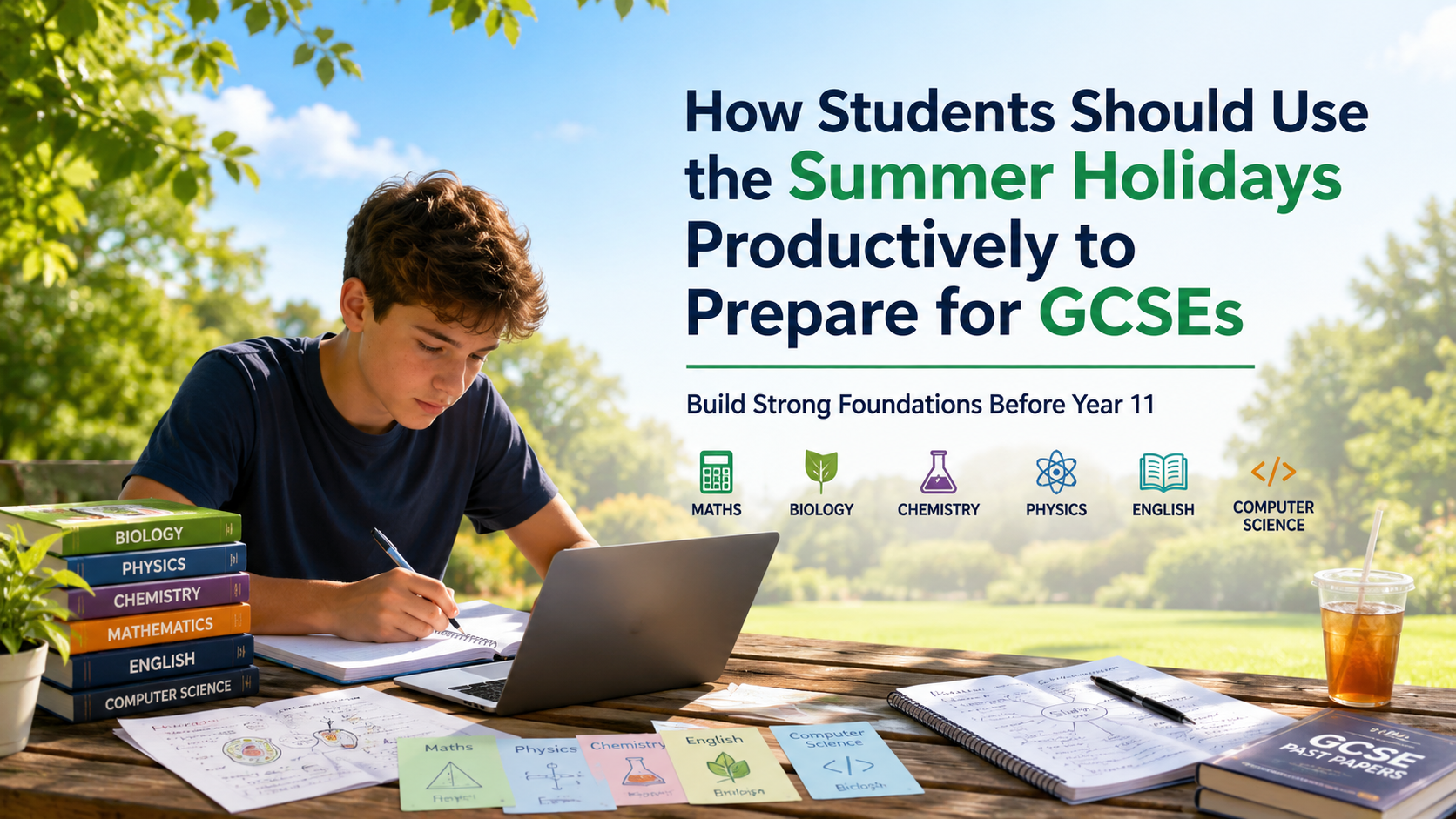
1. Identify Your Weak Areas Before Year 11 Starts
One of the biggest advantages of summer is having time to reflect on your progress without the pressure of upcoming exams. Ask yourself:- Which subjects do I find most challenging?
- Which topics do I consistently struggle with?
- Where did I lose marks in my recent assessments?
2. Build a Consistent Revision Habit
A common mistake GCSE students make is waiting until mock exams to start revising seriously. Summer is the ideal time to build a revision routine that feels manageable and sustainable. A simple approach might include:- 2–3 study sessions per week
- 45–60 minutes per session
- One or two subjects per study block
3. Focus on Active Revision Techniques
Not all revision methods produce the same results. Many students spend hours reading notes or highlighting textbooks but struggle to remember information when it matters most. Instead, focus on active revision methods such as:- Practice questions
- Flashcards
- Self-testing
- Retrieval practice
- Teaching concepts to someone else
4. Get Comfortable with GCSE Exam Questions
Many students lose marks because they aren't familiar with the way GCSE questions are structured. Knowing the content is important. Knowing how to apply that knowledge in an exam is equally important. During summer, spend time exploring:- Past paper questions
- Mark schemes
- Examiner reports
- Command words such as "explain", "analyse", "compare", and "evaluate"
5. Strengthen Key GCSE Subjects
Summer is a great opportunity to strengthen the subjects that form the foundation of your GCSE success. For example:Maths
Review core topics, practise problem-solving, and revisit areas where you frequently make mistakes.Biology, Chemistry and Physics
Focus on understanding concepts rather than memorising facts. Strong foundations in the sciences make future topics much easier to learn.English
Develop your reading, vocabulary, and analytical skills. Regular reading can improve both English Language and English Literature performance.Computer Science
Review key theory topics, strengthen computational thinking skills, and spend time practising programming where appropriate. Improving even slightly across multiple subjects during summer can have a significant impact later in Year 11.6. Don't Try to Finish the Entire GCSE Syllabus
Many students start summer with ambitious plans to complete the entire GCSE course. Most give up after a few weeks. Summer preparation should focus on quality, not quantity. Instead of rushing ahead, focus on:- Revisiting Year 10 content
- Closing knowledge gaps
- Strengthening understanding
- Building confidence
7. Develop Good Study Habits Early
Academic success isn't only about intelligence or effort. It's also about habits. Students who perform well at GCSE often develop habits such as:- Staying organised
- Managing their time effectively
- Reviewing topics regularly
- Following a structured study plan
8. Balance Preparation with Enjoyment
One of the biggest misconceptions about GCSE success is that students need to spend every holiday studying. They don't. Summer should still include:- Time with family and friends
- Hobbies and interests
- Exercise and physical activity
- Proper rest and recovery
Why Summer Preparation Matters
Many students enter Year 11 feeling overwhelmed because they know they have gaps in their understanding. Students who use the summer holidays productively often start the academic year with:- Greater confidence
- Better organisation
- Stronger subject knowledge
- More effective revision habits
- A clearer understanding of their strengths and weaknesses
Final Thoughts
Summer holidays should be a time to recharge. But they can also be one of the most valuable periods for GCSE preparation. You don't need endless revision sessions or unrealistic study schedules. By identifying weak areas, strengthening key subjects, developing effective study habits, and maintaining a consistent routine, you can enter Year 11 feeling more prepared and more confident. Remember, GCSE success isn't about working harder than everyone else. It's about preparing smarter.Getting GCSE-Ready This Summer
We believe summer is one of the best opportunities for students to strengthen their foundations before Year 11. That's why we've designed our GCSE Summer Course to help students use the holidays productively while still enjoying their break. Our programme supports students studying GCSE Maths, Biology, Chemistry, Physics, English, and Computer Science. Through structured lessons, targeted practice questions, personalised feedback, and exam-focused preparation, students can identify knowledge gaps, improve confidence, and strengthen their understanding of key topics. Rather than waiting until mock exams reveal weaknesses, students can use the summer to build strong foundations and develop the skills needed for GCSE success. By the time school resumes, they'll return with greater confidence, stronger subject knowledge, and a clear plan for Year 11.For many students, summer holidays are a chance to take a break from school,...

1. Not Answering the Question That Was Asked
This is one of the biggest reasons students lose marks in GCSE and A-Level exams. Students may recognise the topic immediately and begin writing everything they know about it. However, examiners only award marks for information that directly answers the question. For example, a student might understand a scientific process perfectly but fail to explain the specific aspect the question is asking about. Before answering, students should:- Identify command words
- Highlight key information
- Consider exactly what the examiner wants
2. Ignoring Command Words
Command words provide important instructions about how an answer should be structured. Common examples include:- Describe
- Explain
- Compare
- Evaluate
- Calculate
3. Missing Key Working in Calculations
In maths and science subjects, students often focus entirely on getting the final answer. However, many marks are awarded for the method used. If a calculation mistake occurs but the working is shown clearly, students can still receive method marks. Without working, those marks are often lost. This is why GCSE and A-Level students should always show each step of their calculations, even when they feel confident about the answer.4. Providing Incomplete Answers
Sometimes students know the answer but don't provide enough detail to gain full marks. This is particularly common in:- Science subjects
- Geography
- History
- English
- Psychology
5. Poor Time Management
Students frequently lose marks on questions they could answer simply because they run out of time. This often happens when too much time is spent on:- Difficult questions
- Extended responses
- Checking answers too early
6. Making Avoidable Exam Mistakes
Even strong students can lose marks through simple errors. Examples include:- Misreading the question
- Missing units in calculations
- Forgetting key terminology
- Copying figures incorrectly
- Skipping parts of multi-step questions
7. Lack of Exposure to Real Exam Questions
Many students spend most of their revision reviewing notes and textbooks. While subject knowledge is important, exams assess much more than recall. Students must learn:- How questions are structured
- What examiners are looking for
- How mark schemes work
- How to apply knowledge under pressure
8. Not Learning From Previous Mistakes
Improvement happens when students understand why marks were lost. Unfortunately, many students review a test score and move on without analysing their mistakes. The most successful students regularly ask:- Which questions cost me the most marks?
- Was it a knowledge issue or an exam technique issue?
- What can I do differently next time?
Final Thoughts
Losing marks despite knowing the answer can feel discouraging, but it is often a positive sign. It means the issue may not be a lack of knowledge—it may simply be exam technique. For many GCSE and A-Level students, improving performance isn't about learning more content. It's about:- Understanding examiner expectations
- Applying knowledge effectively
- Managing time well
- Practising under realistic exam conditions
Building Stronger Exam Technique
At AchieveGrade9, we regularly see students who understand the content but aren't achieving the grades they're capable of. In many cases, the difference comes down to exam technique, question interpretation, and confidence under pressure. Through structured mock tests, detailed feedback, and exam-focused preparation, students gain a clearer understanding of where marks are being lost and how to improve before their final GCSE and A-Level exams. Sometimes the key to higher grades isn't learning more—it’s learning how to demonstrate what you already know.Helping Students Prepare More Effectively
At AchieveGrade9, we work closely with GCSE and A-Level students to help them build effective revision habits, improve exam technique, and identify weak areas before final exams. Through structured mock tests, targeted feedback, and exam-focused preparation, students gain a clearer understanding of:- What to improve
- How to improve it
- How to perform confidently under exam conditions
One of the most frustrating experiences for GCSE and A-Level students is walking out...

1. Focus on Active Revision, Not Passive Reading
One of the most common mistakes GCSE students make is relying too heavily on passive revision techniques. This includes:- Re-reading notes repeatedly
- Highlighting textbooks
- Watching videos without testing understanding
- Answering practice questions
- Testing yourself from memory
- Explaining concepts out loud
- Completing timed exam questions
2. Use Past Papers Strategically
Past papers are one of the most powerful GCSE revision tools, but only when used correctly. Many students simply complete papers without properly reviewing their mistakes. The real improvement comes from:- Understanding why marks were lost
- Identifying patterns in errors
- Looking at the mark scheme and Learning examiner expectations
- Improving exam technique over time
3. Revise in Short, Consistent Sessions
Long revision sessions often lead to reduced focus and poor retention. Students usually perform better with:- Shorter study blocks
- Regular breaks
- Daily consistency
4. Prioritise Weak Areas First
A common revision mistake is repeatedly studying topics students already feel comfortable with. This feels easier, but it limits progress. The biggest GCSE improvements usually come from targeting:- Weak topics
- Frequently repeated mistakes
- Areas of low confidence
5. Practise Under Real Exam Conditions
Many students understand topics well at home but struggle during actual exams. This is often because they haven’t practised under timed conditions. Effective GCSE preparation should include:- Timed papers
- Reduced distractions
- Working without notes
- Building stamina for longer exams
6. Create a Realistic Revision Timetable
A good revision timetable should create structure — not stress. One of the biggest mistakes students make is creating unrealistic schedules they can’t maintain consistently. Instead:- Focus on manageable daily goals
- Balance subjects across the week
- Include breaks and recovery time
- Review progress regularly
7. Learn From Feedback
Improvement happens fastest when students understand exactly what needs to change. Simply completing revision tasks isn’t enough. Students should regularly ask:- Why did I lose marks here?
- Which topics keep appearing as weaknesses?
- Am I struggling with knowledge or exam technique?
8. Don’t Ignore Confidence and Mindset
Many GCSE students struggle not because they lack ability, but because they lose confidence after setbacks or poor mock results. Confidence affects:- Exam performance
- Focus under pressure
- Motivation to revise consistently
Final Thoughts
There is no single “perfect” revision method that works for every student. However, the most effective GCSE revision strategies usually have one thing in common:- Active learning
- Consistency
- Exam-focused preparation
- Timed Past Paper Practice
- Regular feedback
- Structured & Targeted Practice Topic Questions
Helping Students Prepare More Effectively
At AchieveGrade9, we work closely with GCSE and A-Level students to help them build effective revision habits, improve exam technique, and identify weak areas before final exams. Through structured mock tests, targeted feedback, and exam-focused preparation, students gain a clearer understanding of:- What to improve
- How to improve it
- How to perform confidently under exam conditions
When it comes to GCSE preparation, one of the biggest misconceptions students have is...

 As a parent, it’s not always obvious when a student is falling behind — especially in high-stakes years such as GCSE and A-Level.
Many students do not openly talk about their struggles. Some feel embarrassed, others feel overwhelmed, and many simply do not know how to ask for help.
But the signs are usually there, often subtle, but important.
Recognising these signs early can make a significant difference, not only to grades, but also to your child’s confidence, exam readiness, and long-term academic progress.
Here are 7 key signs to watch out for.
As a parent, it’s not always obvious when a student is falling behind — especially in high-stakes years such as GCSE and A-Level.
Many students do not openly talk about their struggles. Some feel embarrassed, others feel overwhelmed, and many simply do not know how to ask for help.
But the signs are usually there, often subtle, but important.
Recognising these signs early can make a significant difference, not only to grades, but also to your child’s confidence, exam readiness, and long-term academic progress.
Here are 7 key signs to watch out for.
1. Inconsistent Test Scores
A common early warning sign is fluctuating performance. Your child may score well in one exam and then drop significantly in the next without a clear reason. This often points to gaps in understanding, inconsistent revision habits, or weak exam technique. Sometimes students know the content, but lose marks because they:- Misread the question
- Miss key command words such as describe, explain or evaluate
- Run out of time
- Do not structure answers clearly
2. Avoidance of Studying
If your child frequently delays revision or avoids certain subjects, it is rarely just procrastination. In many students, avoidance is linked to:- Feeling overwhelmed by the syllabus
- Not knowing where to start
- Fear of failure
- Losing confidence after poor results
3. Declining Academic Confidence
Pay attention to how your child talks about their studies. Statements such as:- “I’m just not good at maths.”
- “I can’t do science.”
- “I’ll never pass English.”
4. Studying Hard, But Not Improving
Many students put in hours of revision but see little progress. This is especially common when revision relies on passive techniques such as:- Re-reading notes
- Highlighting textbooks
- Watching videos without practising questions
- Past paper questions
- Timed exam practice
- Mark scheme analysis
- Feedback on mistakes
- Targeted revision of weak areas
5. Difficulty Applying Knowledge in Exams
Understanding a topic at home is one thing. Applying it under exam pressure is another. A student may appear confident in lessons but struggle with exam questions that require:- Application to unfamiliar situations
- Multi-step problem solving
- Extended written responses
- Data analysis
- Practical method questions
6. Repeating the Same Mistakes
If your child keeps making similar errors across tests, those mistakes are usually not being properly addressed. Examples include:- Losing marks on graphs and calculations
- Forgetting units
- Missing keywords
- Weak conclusions in 6-mark questions
- Careless errors under time pressure
- Review where marks were lost
- Understand why the answer was weak
- Practise correcting the same issue repeatedly
7. Increased Exam Anxiety or Stress
Some nerves before exams are normal. However, excessive stress, panic, freezing in tests, or constant worry often indicate poor preparation systems rather than a lack of ability. Confidence usually improves when students:- Practise timed papers regularly
- Understand exam technique
- Know what to revise
- See clear progress over time
Why Exam Technique Matters
Many parents assume better grades only come from learning more content. In reality, two students with the same knowledge can achieve very different results depending on exam technique. This includes:- Interpreting the question correctly
- Understanding command words
- Structuring answers clearly
- Using terminology examiners reward
- Managing time effectively
- Avoiding common mistakes
What Can Parents Do?
If you recognise these signs, the goal is not to increase pressure — it is to improve direction. Focus on:- Identifying specific weak areas
- Encouraging open conversations
- Creating a consistent revision plan
- Using real exam-style practice
- Getting feedback from experienced teachers or tutors
Early Intervention Matters
Small gaps in understanding can quickly grow if left unaddressed, especially in cumulative subjects such as Maths and Science. With the right structure, support, and exam-focused preparation, these gaps can be closed efficiently. This is often when students begin to see major improvements in both marks and confidence.How Achieve Grade 9 Can Help
At Achieve Grade 9, we regularly work with GCSE and A-Level students showing these exact signs. One of the most effective first steps is identifying:- Where marks are being lost
- Whether the issue is knowledge or exam technique
- How your child performs under timed conditions
- What improvements will make the biggest impact
Final Thought
Struggling academically does not mean your child is not capable. In most cases, it simply means they need:- Better structure
- Clearer guidance
- Stronger exam technique
- More effective practice
As a parent, it’s not always obvious when a student is falling behind —...
Identify Knowledge Gaps Early
Mock exams highlight weaknesses that revision alone cannot reveal, allowing targeted improvement before final exams.Improve GCSE Maths & Science Exam Technique
In GCSE Maths, Physics, Chemistry and Biology, marks are awarded for method, terminology and structured answers. Mock papers teach students how examiners award marks, which significantly raises grades.Build Strong Time Management Skills
Regular GCSE mock maths papers and A-Level practice tests train students to manage timing, complete papers confidently, and build exam stamina.Reduce Exam Anxiety
Practising under timed conditions replaces fear with familiarity and builds exam confidence.Track Progress & Improve Strategically
Mock results provide measurable progress, helping students focus on revision and set realistic target grades.Why AchieveGrade9 is the Ideal Choice for Mock Tests
At AchieveGrade9, we provide high-quality GCSE and A-Level mock exams designed by an expert Tutor/Examiner. Our resources are aligned with the UK curriculum and are crafted to mimic real exam conditions. Students can access:- Our Mock papers covering all key predicted topics
- Full-length GCSE and A-Level mock tests for subjects such as Physics, Chemistry, Biology, Maths and Further Maths
- Detailed personalised feedback for improvement
- Detailed Mark scheme and guidance to understand mistakes
- coverage for AQA, OCR & Edexcel
Tips to Make the Most of Mock Exams
- Treat every mock test seriously: Approach it as if it’s the real exam.
- Review answers thoroughly: Learn from mistakes instead of skipping them.
- Practice regularly: Frequent mock tests lead to better retention and understanding.
- Simulate exam conditions at home: Use a timer and remove distractions for maximum benefit.
- Review feedback thoroughly and work on the mistakes mentioned for improvement
How Many Mocks Should You Do?
Aim for a full set of papers per subject, spread out. Start with topic questions and timed sections, then move to full papers closer to exams. Always review your mock soon after—this is where real improvement happens.Conclusion
Mock tests work because they improve timing, sharpen revision, teach exam technique, and build confidence. You don’t need perfect scores early; you need steady progress. Start with one past paper this week, review it properly before the next mock, and fix just a few key issues. Practice, review, repeat. That’s how grades improve.Identify Knowledge Gaps Early Mock exams highlight weaknesses that revision alone cannot reveal, allowing...
 Preparing for GCSE and A-Level exams requires more than reading notes and revising textbooks. To achieve top grades, students must practise performing under real exam conditions.
That’s why GCSE mock exams and A-Level mock tests are one of the most effective strategies for improving grades in 2026.
At AchieveGrade9, we specialise in high-quality mock papers designed to replicate real exam standards for AQA, OCR and Edexcel.
Preparing for GCSE and A-Level exams requires more than reading notes and revising textbooks. To achieve top grades, students must practise performing under real exam conditions.
That’s why GCSE mock exams and A-Level mock tests are one of the most effective strategies for improving grades in 2026.
At AchieveGrade9, we specialise in high-quality mock papers designed to replicate real exam standards for AQA, OCR and Edexcel.
What Are GCSE & A-Level Mock Exams?
A mock exam is a full-length, timed paper completed under realistic exam conditions. It mirrors official exam structure, question wording and difficulty, mark scheme standards and real time pressure.The Role of Mock Tests in Exam Preparation
A GCSE and A level mock test provides students with a realistic experience of what an exam day feels like. It simulates the pressure, timing, and question styles that students will encounter in their real GCSE or A-Level exams. This allows students to:- Identify knowledge gaps before the actual exam
- Practice time management under exam conditions
- Familiarise themselves with question formats
- Get rid of Exam Anxiety
How GCSE and A Level Mock Exams Improve Performance
1. Boost Confidence
Many students feel anxious before exams. Taking mock exams helps reduce stress by making students more comfortable with the structure and expectations of the actual test.2. Improve Exam Technique
A mock paper isn’t just about getting the right answer—it’s about understanding how marks are awarded, practising problem-solving methods, and refining your approach to different types of questions.3. Track Progress Over Time
By comparing results from different GCSE mock tests, students and teachers can track improvements and make targeted interventions to address weaker areas.4. Build Time Management Skills
Time management is a common challenge in GCSE and A-Level exams. Mock exams allow students to practice pacing themselves, ensuring they can complete all questions within the allocated time.Preparing for GCSE and A-Level exams requires more than reading notes and revising textbooks....